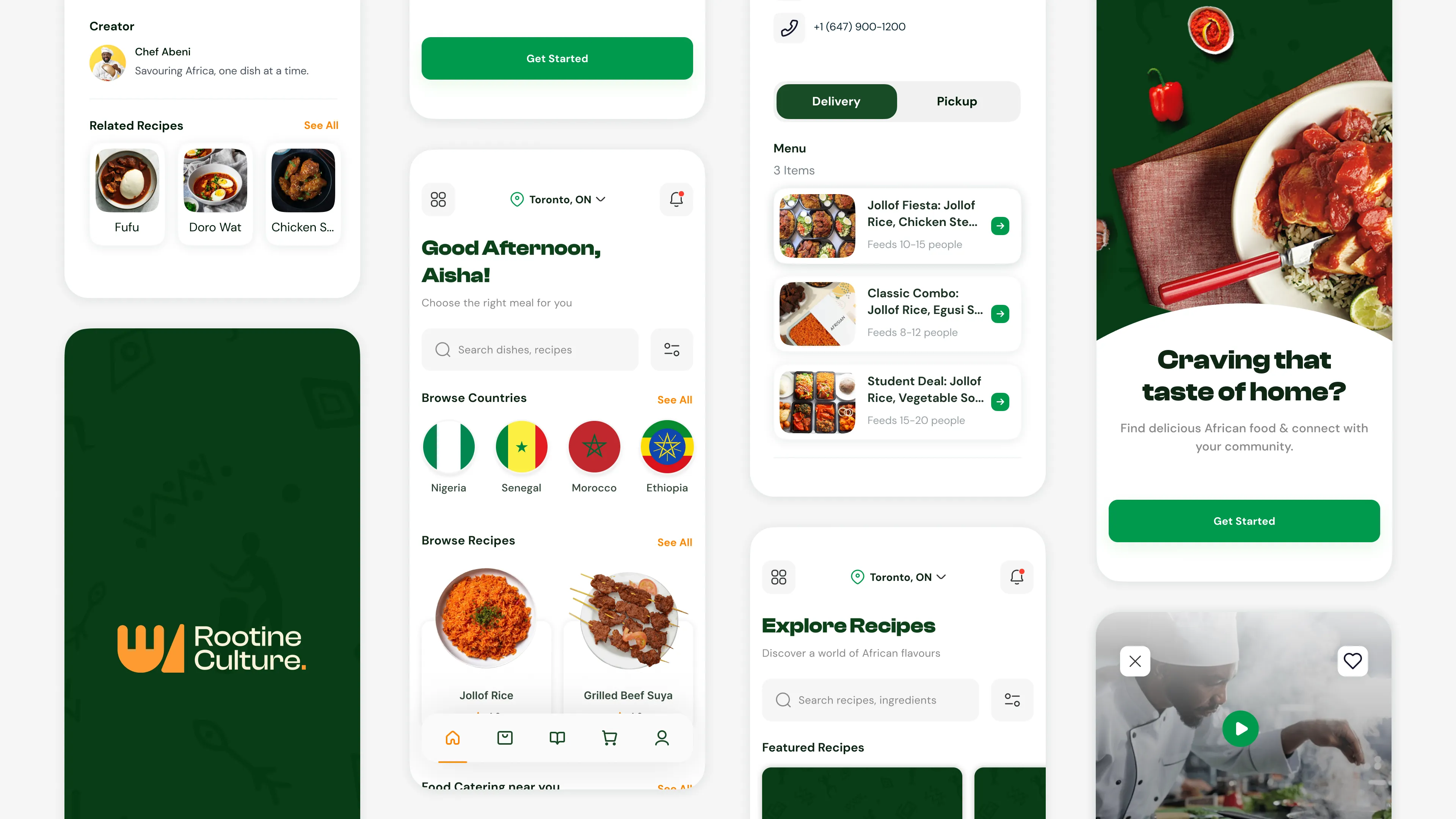
01 Problem and Solution
A gap no app was filling
International students from Africa relocating to Canada face a quiet but real challenge: figuring out what to eat. Existing platforms like UberEats and DoorDash serve a broad audience, leaving little room for African cuisine, bulk ordering, or any sense of cultural community. With African student enrollment in Canada growing 60% in a single year (2021 to 2022), the need for a targeted solution was undeniable.
The problem
Students struggle to find African restaurants, feel limited by existing apps, and rely heavily on word of mouth from friends and family to make food decisions.
The solution
A dedicated mobile app that connects African students to familiar food businesses, enables bulk ordering, surfaces culturally relevant recipes, and fosters community through shared food experiences.
02 Research
Grounded in real voices
A detailed survey was distributed to 116 self-identified African students studying in Canada, followed by in-depth interviews with 10 participants. The research uncovered three core patterns that shaped every design decision.
Key insights
Lack of discovery
Most participants found it difficult to locate African restaurants or bulk ordering options on existing apps. The gap between what they wanted and what was available was consistent across all interviews.
Trust through community
Students rely heavily on friends and family for food recommendations, so social trust needs to be core to the product experience, not added as an afterthought.
Budget awareness
Around 71% of participants spend between $100–$200 on groceries monthly. Price sensitivity and bulk purchasing were recurring themes across both the survey and interviews.
Monthly grocery spend
Distribution across 116 participants
03 Design Process
From insight to interface
Following the Design Thinking methodology, each phase built on the last. Research shaped the persona. The persona anchored the experience map. The experience map drove prioritisation. Prioritisation directed what got built first.
Empathise
116 surveys, 10 interviews, competitor analysis
Define
Persona development, experience mapping, HMW framing
Ideate
User stories, task flows, feature prioritisation
Prototype
Lo-fi sketches, visual identity, hi-fi prototype
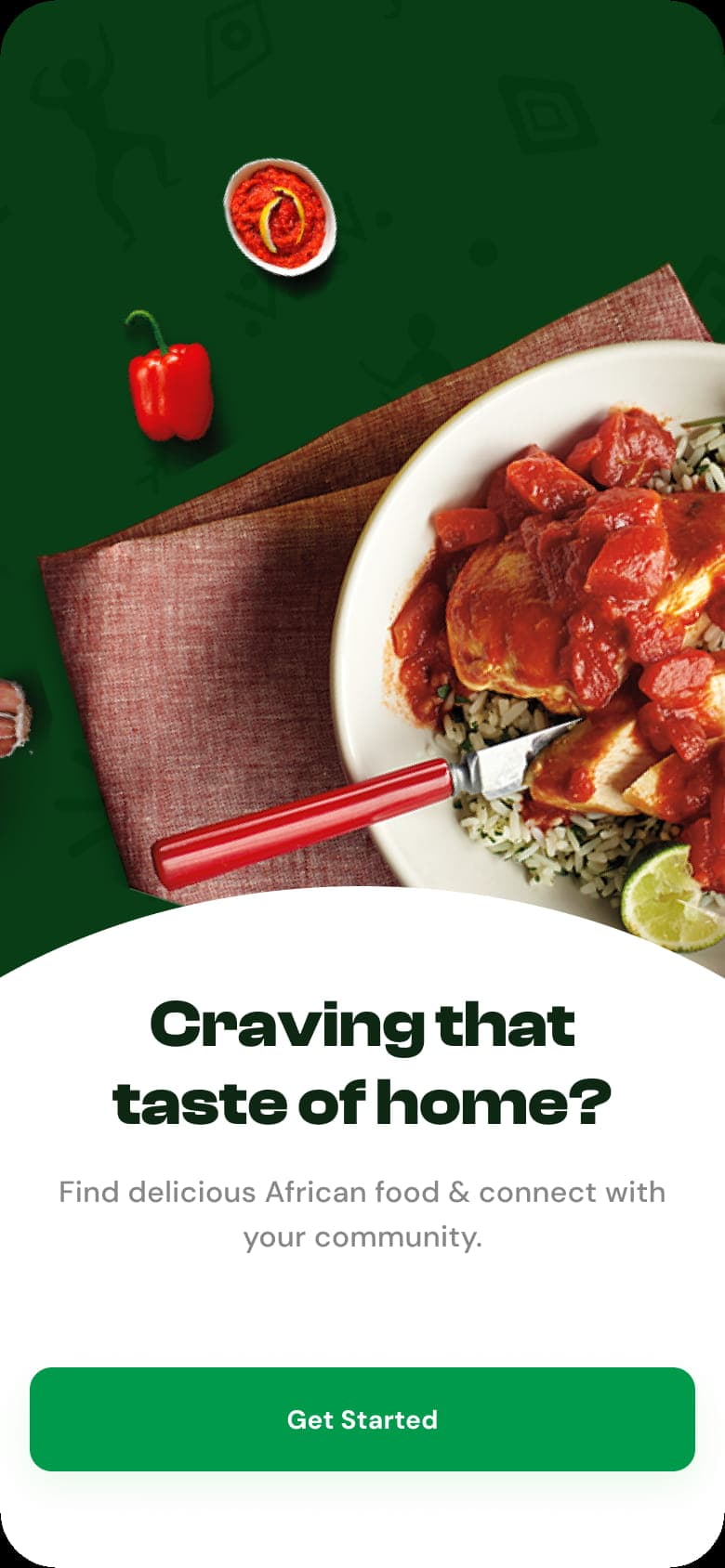
Onboarding
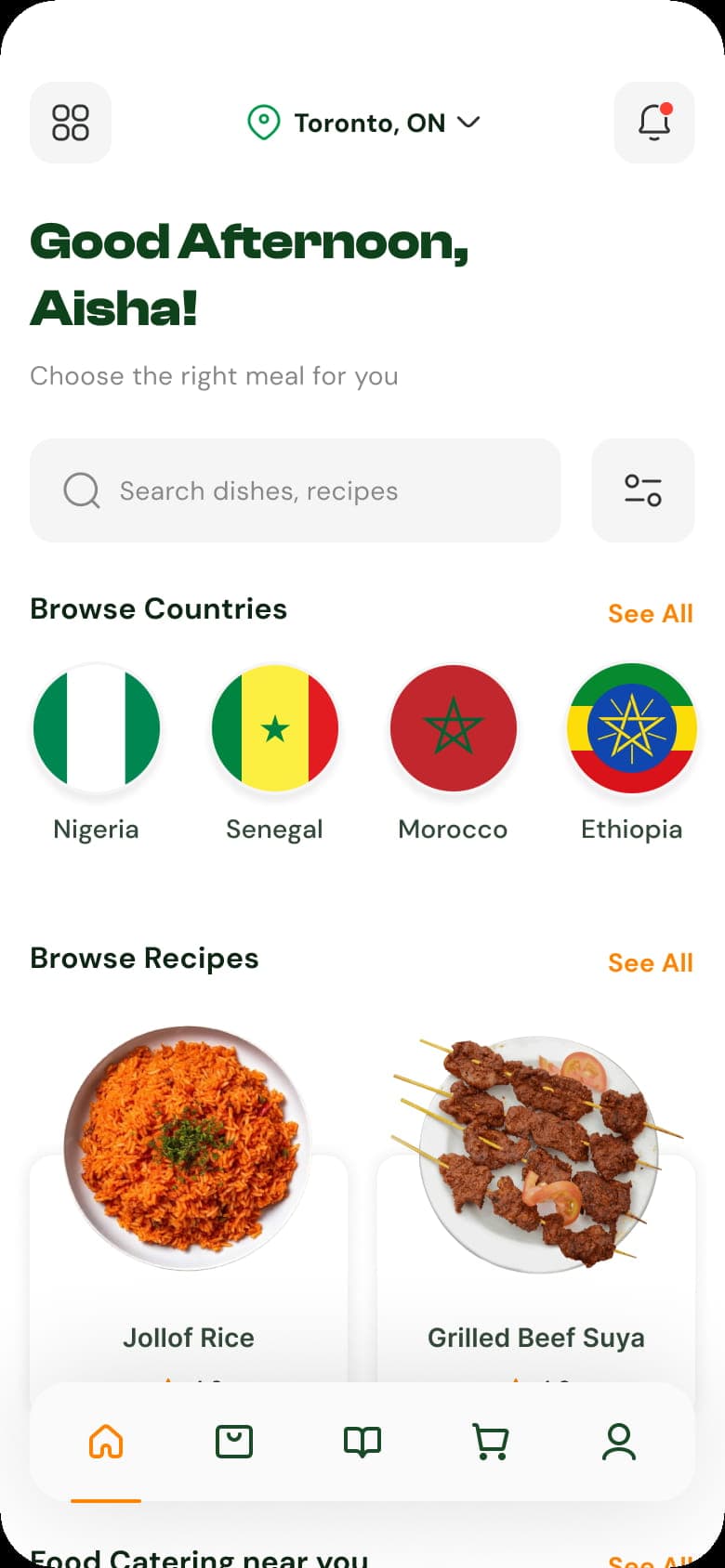
Home
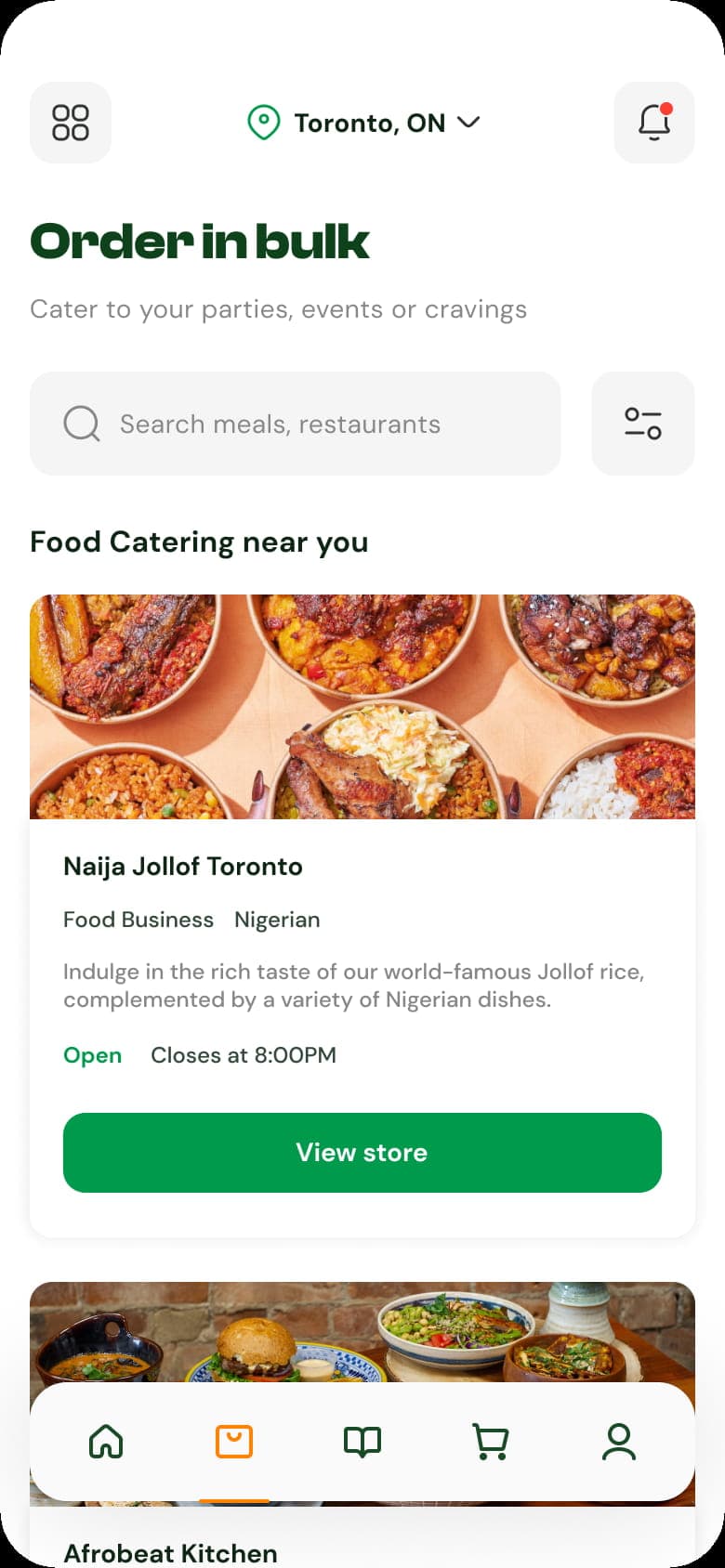
Order
04 Brand System
Built to feel like home
Every visual decision was rooted in the research. The colour palette, typography, and identity were designed to feel warm, familiar, and culturally resonant for African students navigating life in a new country.

Ready to see it in action?
Explore the full prototype or get in touch to discuss how ProdVent approaches 0 to 1 product design.